Here is a statistic that surprises almost everyone: the United States Environmental Protection Agency places pet waste in the same category of water pollutants as oil spills, pesticide runoff, and abandoned mine drainage. That is not bureaucratic overreach. America’s roughly 90 million dogs produce on the order of 10 million tons of waste every year, and studies of urban watersheds routinely trace a meaningful share of their bacterial contamination back to a source most people consider a private nuisance rather than a public one.
We tend to frame dog waste as a matter of courtesy — a shoe hazard, a neighborly annoyance. The research tells a different story. Uncollected pet waste is a measurable driver of waterway contamination, closed beaches, and preventable human illness. Understanding the mechanics of how a pile in the grass becomes bacteria in a river is the first step toward treating cleanup as the public health practice it genuinely is.
From Backyard to Waterway in One Rainstorm
Storm drains are the critical link most people miss. Unlike sewer systems, the drains that line residential streets in most American cities carry runoff directly to creeks, rivers, and lakes with no treatment whatsoever. When rain falls on a lawn, park strip, or sidewalk where waste was left behind, the water dissolves fecal bacteria and carries them straight into the nearest drain — and from there into the water people fish, paddle, and swim in.
A single gram of dog waste can contain more than 20 million fecal coliform bacteria. Multiply that across the thousands of dogs in a typical watershed and the arithmetic becomes sobering: water quality researchers using DNA source-tracking have found that dogs contribute a significant fraction of the fecal bacteria in some urban streams — in certain studies, more than a quarter of it.
The Diseases That Ride Along
Bacterial counts are only part of the picture. Dog waste is a documented transmission route for zoonotic parasites and pathogens — organisms that cross from animals to people. Roundworm (Toxocara) is the headline concern: the CDC estimates that millions of Americans have been exposed, and children are disproportionately affected because they play in the soil where durable roundworm eggs persist. Hookworm, whipworm, Giardia, Salmonella, and Campylobacter round out the list.
What makes these organisms a public problem rather than a private one is their persistence. Roundworm eggs can remain infectious in soil for years, surviving winters and droughts that kill most microbes. A park corner or beach where owners skip cleanup does not reset each season — the contamination accumulates.
Nutrient Pollution: The Slow-Motion Damage
Beyond pathogens, pet waste delivers nitrogen and phosphorus to water bodies, and aquatic ecosystems respond to those nutrients the way a neglected lawn responds to fertilizer — with explosive, destructive growth. Algal blooms fed partly by pet waste runoff deplete dissolved oxygen as they decay, stressing or killing fish and shading out native aquatic plants.
Some of those blooms are toxic in their own right. Harmful algal outbreaks have forced hundreds of lake closures across the country in recent summers, and ironically, dogs themselves are among the most frequent victims, since they drink and swim without reading the warning signs. Veterinary case reports of cyanobacteria poisoning in dogs have risen alongside bloom frequency, closing an unhappy loop: waste left by pets helps feed the very water conditions that later sicken them.
What Communities Are Doing About It
Municipalities have stopped treating this as a manners issue. More than half of large U.S. cities now have enforceable pooper-scooper ordinances with fines that commonly range from $100 to $750. Some homeowners associations have gone further, using commercial DNA registries to match abandoned waste to a specific dog in the community. Parks departments install bag dispensers and dedicated waste stations because the data shows convenience, more than signage, is what changes behavior.
Community associations that want to get serious usually pair infrastructure with enforcement, and many bring in trusted professionals to service common areas on a weekly schedule rather than relying on volunteer goodwill. Shared spaces stay measurably cleaner when someone is accountable for them by contract.
What the Research Says Individual Owners Should Do
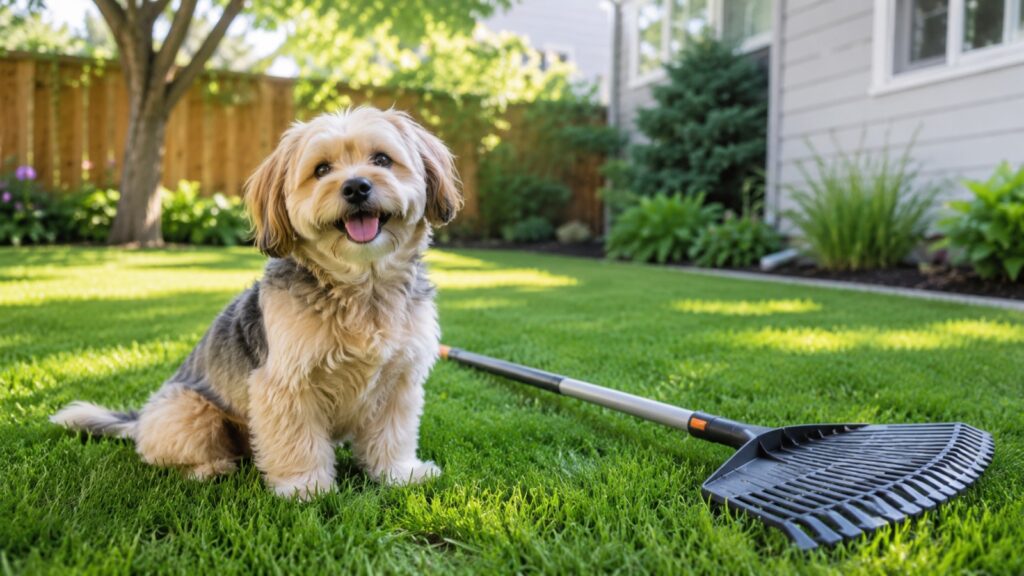
The individual prescription is refreshingly simple: pick it up promptly, every time, everywhere — including your own backyard, which drains to the same storm system as the sidewalk. Prompt matters because bacterial leaching begins with the first rainfall, not after the waste visibly breaks down. Tools remove the main excuse; shoppers comparing hardware-store options like the Arm and Hammer Pooper Scooper against bag-based stick designs will find that the best modern tools let you collect waste without touching anything, which research on habit formation suggests is exactly what keeps people compliant.
Disposal method matters, too. Public health guidance favors sealing waste and placing it in the trash destined for a lined landfill. For large cleanups, double-sealing in heavy duty garbage bags prevents tears and leaks between the yard and the curb. Composting dog waste for food gardens is discouraged — home compost piles rarely reach temperatures that destroy roundworm eggs — and leaving it to “break down naturally” is, as the watershed data shows, simply outsourcing the problem to the nearest creek.
Key Takeaways
- The EPA classifies pet waste as a nonpoint-source water pollutant alongside oil and pesticide runoff.
- Storm drains carry untreated runoff — and dissolved fecal bacteria — directly into rivers and lakes.
- One gram of dog waste can hold over 20 million fecal coliform bacteria.
- Roundworm eggs persist in soil for years, and children face the highest exposure risk.
- Nutrients in pet waste help fuel algal blooms that suffocate fish and close lakes.
- Prompt pickup and sealed trash disposal are the evidence-backed individual actions.
Conclusion
Public health rarely turns on dramatic interventions. It turns on millions of small, boring acts performed consistently — washing hands, covering coughs, and yes, bagging dog waste before the rain comes. The science linking that pile in the park to bacteria in the watershed is no longer in dispute; the only open question is how quickly community norms catch up to it.
The encouraging part is how cheap the fix is. No new technology, no tax increase, no behavioral revolution — just a bag, a scooper, and the decision to treat every pickup as a small contribution to clean water. Few public health problems of this scale can be solved for pocket change. This one can.