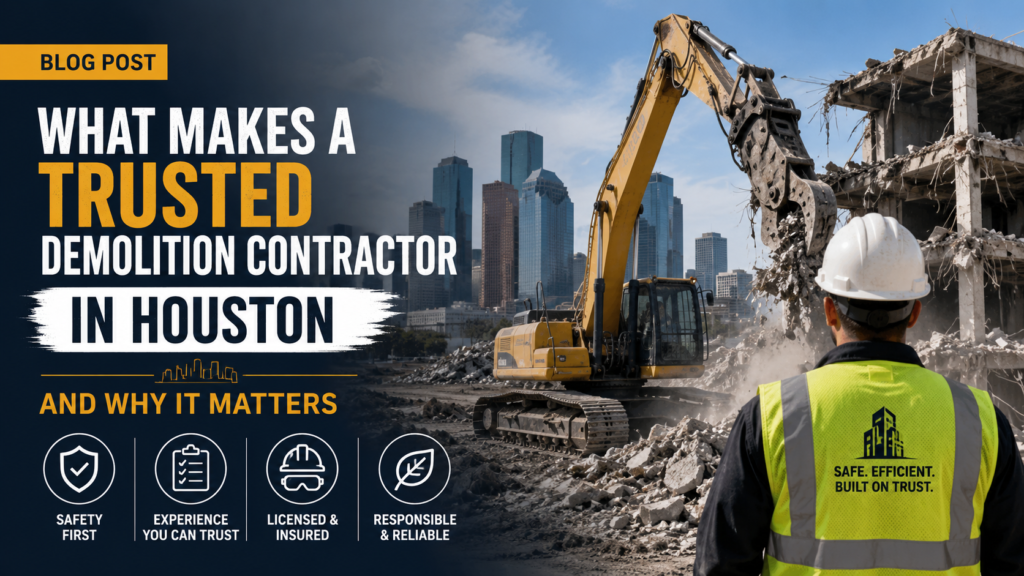
Houston is one of the fastest-growing cities in the United States. With that growth comes constant change, new developments rising where old structures once stood, residential rebuilds replacing storm-damaged homes, and commercial redevelopments reshaping neighborhoods across Harris County and beyond. At the center of every one of those transitions is a demolition contractor. But not all demolition contractors are the same. Understanding what separates a Trusted Demolition Contractor Houston from the rest is essential for anyone planning a project in Houston.
Demolition sounds straightforward. A structure comes down and the debris goes away. In practice, however, demolition is one of the most complex and risk-intensive phases of any construction or development project. It involves structural analysis, hazardous material identification, permit acquisition, utility coordination, equipment selection, safety management, and careful debris handling all before a single wall comes down. Doing it right requires expertise, proper licensing, and the kind of judgment that only comes from years of real-world experience on Houston-area job sites.
What a Demolition Contractor Actually Does
A demolition contractor is responsible for the safe, controlled removal of structures or portions of structures in preparation for new construction, renovation, or land redevelopment. The scope of work can range from the interior gut-out of a single room to the complete teardown of a multi-story commercial building. Most full-service demolition contractors in Houston handle a broad spectrum of project types, including residential home demolition, garage and outbuilding removal, commercial building teardowns, industrial facility dismantling, selective interior demolition, concrete removal, and site clearing.
Before any physical work begins, a trusted contractor conducts a thorough site assessment. This involves walking the structure to understand its materials and construction method, identifying any hazardous substances such as asbestos, lead paint, or mold that must be addressed before demolition begins, and evaluating the surrounding site conditions including proximity to neighboring structures, available access for equipment, and any underground utilities that could be affected. This pre-demolition planning phase is where the quality of a contractor’s expertise is most clearly visible and where shortcuts can have serious consequences.
The Permit Process in Houston
Demolition in Houston is regulated by the City of Houston’s Permitting Center, and permits are required for the demolition of most structures. The permit process involves submitting documentation about the property, the scope of demolition, and the methods to be used. For structures in certain historic districts or with specific environmental conditions, additional review may be required. For projects that involve hazardous materials such as asbestos which is present in many older Houston buildings Texas Department of State Health Services (DSHS) notification is also required before demolition can begin.
A trusted demolition contractor handles the permit process on behalf of the client, drawing on familiarity with the Houston permitting system to secure approvals efficiently. This is not a small convenience delays in permitting can push back entire construction timelines, and unpermitted demolition can result in stop-work orders, fines, and costly remediation requirements. Working with a contractor who understands and respects the regulatory environment is essential.
Types of Demolition Services in Houston
Full Structure Demolition is the complete removal of a building, including its foundation. This is typically required when a structure is beyond economical repair, when a property is being cleared for new construction, or when a structure poses a safety hazard. In Houston, full demolition is common in areas recovering from hurricane or flood damage, where buildings have been compromised to the point that repair is not viable. The process involves disconnecting utilities, obtaining permits, mechanically demolishing the structure, and removing all resulting debris.
Selective or Partial Demolition involves removing specific elements of a structure while leaving the rest intact. This is common in renovation projects where a building’s envelope is being preserved but its interior is being completely reconfigured. Selective demolition requires a higher level of precision than full teardown, as work must be performed without damaging structural elements, utilities, or adjacent finishes that are meant to remain in place.
Interior Gut-Out is a specific type of selective demolition in which all non-structural interior elements walls, ceilings, flooring, mechanical systems, and fixtures are removed from a building while its exterior shell and structural frame remain. This is the typical first step in a commercial renovation or major residential remodel, clearing the way for new layout, systems, and finishes.
Concrete Demolition and Removal is a specialized subset of demolition work that addresses slabs, foundations, driveways, retaining walls, and other concrete elements. Concrete requires specific equipment jackhammers, hydraulic breakers, and excavators with specialized attachments and generates heavy debris that must be properly loaded and disposed of. In Houston, concrete recycling is common, with crushed concrete repurposed as fill material or aggregate for other construction applications.
Hazardous Materials: A Critical Consideration in Houston
Houston’s building stock spans over a century of residential and commercial construction. Many structures built before 1980 contain asbestos-containing materials in floor tiles, ceiling tiles, pipe insulation, roof shingles, and joint compounds. Structures built before 1978 may contain lead-based paint. Both materials pose serious health risks if disturbed without proper containment and removal procedures.
A trusted demolition contractor in Houston has either the in-house certification or established relationships with licensed abatement specialists to address these hazards before any demolition begins. Texas requires that a licensed asbestos inspector survey any structure before demolition and that identified asbestos-containing materials be removed by a licensed contractor using prescribed containment and disposal methods. Cutting corners on hazardous material handling is not only illegal it creates serious health risks for workers, neighboring residents, and future occupants of the site.
Equipment and Methods
The methods and equipment used in demolition depend on the size and construction of the structure, the site conditions, the proximity to neighboring buildings, and the requirements of the demolition plan. Common demolition methods include mechanical demolition using excavators with grapple or hydraulic shear attachments, which is efficient for most residential and mid-scale commercial structures. High-reach excavators allow demolition of taller structures in a controlled, top-down sequence. Wrecking balls, once the iconic image of demolition, are less commonly used today due to the precision limitations they impose. Implosion, which uses carefully placed explosive charges to bring a structure inward and downward, is reserved for very large structures in situations where conventional mechanical demolition is not practical.
A contractor with a well-maintained fleet of owned equipment rather than relying entirely on rentals can deploy the right machine for a job without delays and maintain better control over scheduling, quality, and safety. This is a meaningful differentiator when evaluating demolition contractors in Houston.
Safety Standards and Insurance
Demolition is one of the highest-risk activities in the construction industry. OSHA’s demolition standards (29 CFR 1926 Subpart T) govern how demolition projects must be planned and executed, including requirements for engineering surveys before demolition, fall protection, dust control, and debris management. A trusted demolition contractor maintains a strong safety record, conducts regular safety training, and keeps their crews equipped with the personal protective equipment required for each phase of work.
Insurance is equally critical. A reputable Houston demolition contractor carries general liability insurance, workers’ compensation coverage, and any additional coverage appropriate to the scope of their work. This protects property owners from liability in the event of an accident or property damage during the demolition process. Always verify that a contractor’s insurance is current and adequate before work begins.
Why Local Experience Matters in Houston
Houston’s combination of clay-heavy soil, high humidity, hurricane exposure, and a vast diversity of construction types from century-old craftsman homes in Montrose to concrete tilt-wall commercial buildings in the Energy Corridor creates a demolition environment unlike any other in the country. A contractor who has worked extensively in Houston understands how local soil conditions affect foundation demolition, how Houston’s climate affects dust control and site drainage during demolition, how local utilities are typically configured, and which city departments and inspectors to work with for efficient permitting.
This local knowledge translates directly into better project outcomes faster permitting, fewer surprises during demolition, and more efficient waste disposal through established relationships with local haulers and recycling facilities.
Final Thoughts
In a city growing as rapidly as Houston, demolition is an ever-present reality of the built environment. Whether you are clearing an old structure to make way for a new home, preparing a commercial site for redevelopment, or renovating an existing building from the inside out, working with a trusted, experienced, and properly licensed demolition contractor is the foundation of a successful project. The right contractor brings not just equipment and manpower, but knowledge, judgment, regulatory compliance, and a genuine commitment to doing the job right every time.